Early Intervention (NDIS) Physiotherapy for Babies and Young Children
Babies On The Move provides NDIS early intervention paediatric physiotherapy across the Gold Coast, Tweed Coast and Northern Rivers NSW for babies and young children with disability, developmental delay and neurological, genetic or metabolic conditions.
We specialise in early intervention, supporting children to develop movement, strength, mobility and gross motor skills that help them participate in everyday family and community life.
Our mobile physiotherapy service allows children to be supported where they naturally live, learn and play — at home, childcare, the park and in the community.
Early Intervention & NDIS Physiotherapy
Paediatric physiotherapy can support children whose disability or developmental difficulties affect their movement, mobility or participation.
We work with babies and young children with:
developmental delay
cerebral palsy (CP) or increased risk of cerebral palsy
genetic and chromosomal conditions
metabolic conditions
Prader-Willi syndrome (PWS)
Down syndrome
neuromuscular conditions
premature birth or complex medical histories
A diagnosis alone doesn't determine a child's abilities or needs. Children with the same condition can have very different strengths and challenges, so physiotherapy is individualised to your child's abilities, medical needs, fatigue, developmental stage and family goals.
Don't Wait to Start Early Intervention
Families can sometimes face a long wait to see a paediatrician, particularly when developmental concerns are first identified.
You do not need to wait for a paediatrician appointment or confirmed diagnosis before seeing a paediatric physiotherapist.
A paediatric physiotherapist can begin assessing your child's gross motor development, movement quality, strength, muscle tone, symmetry, posture and functional abilities, and introduce practical strategies to support development while you are waiting for further medical assessment.
Physiotherapy does not replace assessment by your GP, paediatrician or specialist team when this is required. However, it can allow your child's development to be assessed and supported earlier rather than simply waiting.
Where appropriate, assessment findings and progress can also be shared with your child's GP, paediatrician or broader medical and allied health team.
Early identification is important
The first years of life are a particularly important period for cognitive and motor development, with significant neuroplasticity occurring during infancy.
For babies with neurological or developmental risk factors, early identification allows appropriate monitoring and targeted intervention to begin as early as possible.
Current evidence supports early identification and early, condition-specific intervention for infants with or at high risk of cerebral palsy.
Depending on your baby's age, history and presentation, our physiotherapists may use standardised neurological and developmental assessments.
General Movements Assessment (GMA)
The General Movements Assessment (GMA) evaluates the quality of a young baby's spontaneous movements.
It is an evidence-based assessment used to help identify infants who may be at increased risk of cerebral palsy and other adverse neurodevelopmental outcomes.
Because the GMA is undertaken during specific periods of early infancy, early referral can be particularly important.
Hammersmith Infant Neurological Examination (HINE)
The Hammersmith Infant Neurological Examination (HINE) is a standardised neurological examination for infants.
It assesses areas including neurological function, posture, movements, muscle tone and reflexes.
HINE findings can be considered alongside a baby's clinical history, movement assessment and, where available, neuroimaging to assist with early identification, developmental monitoring and decisions about intervention or further investigation.
Developmental and motor assessment
We may also use standardised motor assessments such as the Alberta Infant Motor Scale (AIMS) and other age-appropriate developmental assessments.
From early identification to early intervention
Assessment is only one part of the process.
Early, targeted intervention is particularly important during infancy and early childhood, when the brain is undergoing rapid development and neuroplasticity.
For infants with or at high risk of cerebral palsy, contemporary evidence supports early, active and task-specific motor training that encourages the child to practise meaningful movements and functional skills.
Rather than relying primarily on passive movement or waiting to see whether a child "catches up", we aim to create opportunities for children to actively move, explore, problem-solve, practise and learn through play.
For children with other genetic, metabolic, neurological or developmental conditions, intervention is adapted to their individual diagnosis, presentation, strengths, developmental needs and family goals.
GAME – Goals, Activity and Motor Enrichment
For babies with cerebral palsy, or those identified as being at high risk of cerebral palsy, our physiotherapy incorporates principles consistent with GAME — Goals, Activity and Motor Enrichment.
GAME is an evidence-based early intervention approach developed for infants with or at high risk of cerebral palsy.
It combines goal-directed and task-specific motor training, parent education and coaching, and enrichment of the child's environment to provide opportunities for active learning and repeated practice.
Parents and caregivers are an important part of therapy
Parents and caregivers spend considerably more time with their child than any therapist can.
For this reason, family coaching and capacity building are important components of early intervention.
Our role is not simply to provide a list of exercises.
We work in partnership with families to understand what is important to them and their child and identify practical strategies that can be incorporated into everyday life.
The aim is to provide frequent opportunities for meaningful practice without making every part of the child's day feel like therapy.
Equipment trials and recommendations
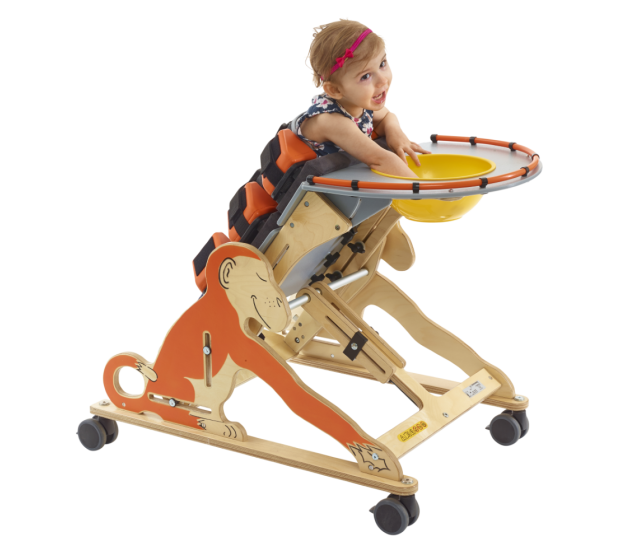
Some babies and young children benefit from equipment to support their positioning, mobility, play, participation and independence.
Where appropriate, we can help identify whether equipment may be useful and organise equipment trials in your home, so options can be assessed in the environment where your child will actually use them.
We can coordinate with the relevant team, which may include equipment suppliers, occupational therapists, and other members of your child's care team, to trial and review suitable options together.
We can help with:
Identifying whether equipment may be beneficial
Organising home-based equipment trials
Trialling different equipment options
Assessing posture, alignment, comfort and function
Considering how equipment fits within your child's home and daily routines
Liaising with suppliers and other health professionals
Providing recommendations and supporting documentation where required
Equipment may include:
Supportive seating
Standing equipment
Mobility equipment
Walkers
Other adaptive equipment that supports safe and meaningful participation
Our aim is to make the process as practical as possible for families and to ensure any equipment recommended is appropriate for your child's needs, supports participation and development, and works within everyday family life.
Physiotherapy in your child's natural environment
Babies On The Move is a mobile paediatric physiotherapy service.
We provide therapy within your child's home, childcare or other familiar community environment.
Working within your child's everyday environment allows us to see how they naturally move, play and participate.
It also allows therapy strategies to use the toys, furniture, people and routines already available to your family.
This supports an important principle of early intervention: practising meaningful skills in the environments in which the child will actually use them.
Working with your child's healthcare team
Early identification and intervention often involves a multidisciplinary team.
With your consent, we can communicate and collaborate with your child's:
Paediatrician
Neurologist
GP
Occupational therapist
Speech pathologist
Dietitian
Orthotist
Early childhood educators
Hospital or neonatal follow-up team
Other allied health professionals
This helps ensure assessment findings, therapy goals and recommendations are coordinated across your child's care.
Your child does not need an NDIS plan to see us
Families can also access Babies On The Move privately.
This can be particularly useful when there are early developmental concerns, while your child is waiting for specialist assessment or NDIS access, or when you would simply like a physiotherapist experienced in infant development to assess your baby.
Early assessment can help determine whether your child's development is progressing as expected, whether ongoing monitoring is appropriate and whether early intervention may be beneficial.
Mobile paediatric physiotherapy across the Gold Coast and Northern Rivers
Babies On The Move provides mobile paediatric physiotherapy for babies and young children across the Gold Coast, Tweed Coast and Northern Rivers.
Our focus is on early identification, evidence-informed intervention, meaningful goals and practical strategies that families can use every day to give babies and young children opportunities to move, explore, learn and participate.
References & Further Reading
Australian Physiotherapy Association.Five facts about physiotherapy for people with a disability. Australian Physiotherapy Association.
Cerebral Palsy Alliance.Changing the GAME: A new approach to therapy for infants with cerebral palsy.
Cerebral Palsy Alliance.General Movements Assessment.
Morgan C, Novak I, Dale RC, Guzzetta A, Badawi N. (2016).Single blind randomised controlled trial of GAME (Goals – Activity – Motor Enrichment) in infants at high risk of cerebral palsy. Research in Developmental Disabilities, 55, 256–267.
Morgan C, Novak I, Dale RC, Guzzetta A, Badawi N. (2014).GAME (Goals – Activity – Motor Enrichment): protocol of a single blind randomised controlled trial of motor training, parent education and environmental enrichment for infants at high risk of cerebral palsy. BMC Neurology, 14, 203.
Novak I, Morgan C, et al. (2017).Early, Accurate Diagnosis and Early Intervention in Cerebral Palsy: Advances in Diagnosis and Treatment. JAMA Pediatrics, 171(9), 897–907.
Morgan C, Fetters L, Adde L, et al. (2021).Early Intervention for Children Aged 0 to 2 Years With or at High Risk of Cerebral Palsy: International Clinical Practice Guideline Based on Systematic Reviews. JAMA Pediatrics.
Further information for families
Families wanting further information about cerebral palsy, early detection, disability and early intervention can visit Cerebral Palsy Alliance and the Australian Physiotherapy Association.